This year, the Tang Prize in Biopharmaceutical Science focuses on cellular immunotherapy, a revolutionary treatment that uses a patient's own immune cells (including genetically modified CAR-T cells) to combat cancer. The impact of the three laureates' discoveries is profound. Since the first FDA approval in 2017, CAR-T cell therapy has already benefited over 30,000 patients with blood cancers worldwide. These therapies provide life-saving options for patient with recurrent and/or refractory blood cancers. Furthermore, TIL therapy has established a new option for treating advanced solid tumors, especially metastatic melanoma. By turning the patient's immune system into a powerful medicine, these breakthroughs have profoundly changed how cancer is treated today.
Dr. Rosenberg, the "father of cancer immunotherapy" and Chief of the Surgery Branch at the National Cancer Institute, developed adoptive cell transfer (ACT) and was the first to demonstrate that transferring a patient's own immune cells could shrink metastatic tumors. His pioneering work identifying TIL and using interleukin-2 (IL-2) to stimulate immune responses laid the foundation for all subsequent cellular therapies. In the 1990s, he achieved another milestone by receiving the first regulatory approval to introduce exogenous genes into human patients. Dr. Sadelain and Dr. June, they both pioneered the development of CAR-T cell therapy. Dr. Sadelain discovered that integrating a CD28 co-stimulatory domain alongside the CD3ζ chain yielded T cells with therapeutic potential, establishing the core architecture that has become the standard framework for all subsequently FDA-approved CAR-T therapies. He identified CD19 as a therapeutic target for B-cell malignancies and first demonstrated that human CD19 CAR-T cells could treat cancer in mice. Dr. June developed the anti-CD3/CD28 magnetic bead expansion protocol, enabling robust ex vivo T-cell expansion that became the manufacturing standard for CAR-T cells. He also helped develop CAR constructs incorporating the 4-1BB (CD137) co-stimulatory domain to enhance T-cell proliferation and long-term survival. He then led pioneering clinical trials of CD19-targeted CAR-T cells, achieving durable remissions in patients with CLL and ALL. His partnership with Novartis culminated in Kymriah becoming the first FDA-approved CAR-T therapy in 2017, marking a pivotal step in bringing CAR-T therapy from research into clinical medicine.
We are honoring these three brilliant scientists—Steven A. Rosenberg, Michel Sadelain, and Carl H. June—who laid the foundation of this remarkable therapeutic revolution through their key groundbreaking discoveries. The selection committee acknowledges that from basic discoveries to therapeutic applications is a long journey and many scientists in academia and industry are involved. Following the "3-awardees" guideline, the committee selected as the most deserving recipients of the 2026 Tang Prize in Biopharmaceutical Science.
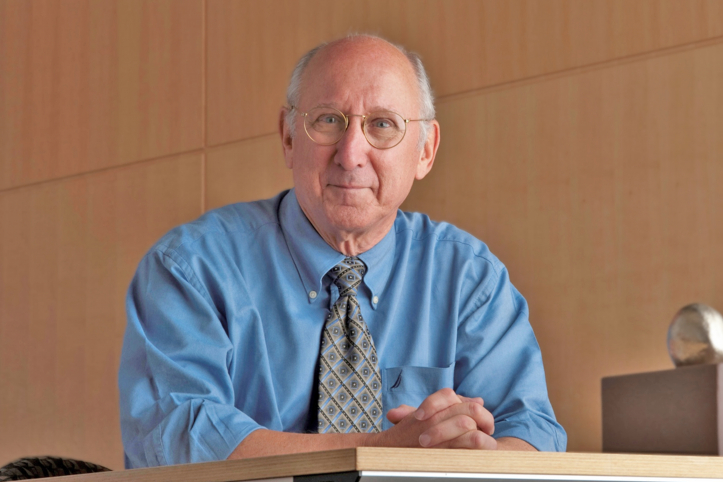
• Rosenberg CV (Provided by Prof. Rosenberg)
Contact Info
Address: Building 10 – Hatfield Clinical Research Center Room 3-3940 Bethesda, MD 20892-1201 USA
Email: SAR@nih.gov
Date of Birth: August 2nd, 1940 (86)
Place of Birth: New York City, New York, USA
Nationality: American
Field of Specialization: Cancer Immunology and Immunotherapy
Education
|
1961
|
B.A. (with general honors) The Johns Hopkins University, Baltimore, Maryland
|
|
1964
|
M.D. The Johns Hopkins University, Baltimore
|
|
1968
|
Ph.D. in Biophysics, Harvard University, Cambridge, Massachusetts
|
Professional Experience
|
2015–Present
|
Foreign Adjunct Professor in Cell Therapy, Karolinska Institutet, Stockholm, Sweden
|
|
2000–Present
|
Editor-in-Chief, Journal of Immunotherapy
|
|
1995–Present
|
Editor, The Cancer Journal
|
|
1988–Present
|
Professor of Surgery, George Washington University School of Medicine and Health Sciences, Washington, D.C.
|
|
1979–Present
|
Professor of Surgery, Uniformed Services University of the Health Sciences, Bethesda, Maryland
|
|
1977–Present
|
Lecturer in Surgery (part-time), Johns Hopkins University, Baltimore, Maryland
|
|
1974–Present
|
Chief, Surgery Branch, National Cancer Institute, Bethesda, Maryland
|
|
1997–2010
|
Member, Medical Board and Medical Executive Committee, NIH Clinical Center
|
|
1991–2000
|
Board of Governors, Weizmann Institute of Science
|
|
1983–1986
|
Member, Board of Directors, American Society of Clinical Oncology (ASCO)
|
|
1978–1986
|
Member, Editorial Board, American Journal of Clinical Oncology
|
|
1974–1979
|
Member, U.S.–U.S.S.R. Cooperative Cancer Immunotherapy Program
|
|
1972–1974
|
Resident in Surgery, Peter Bent Brigham Hospital, Boston, Massachusetts
|
|
1970–1972
|
Clinical Associate, Immunology Branch, National Cancer Institute, Bethesda, Maryland
|
|
1970–1972
|
Surgeon, United States Public Health Service, National Institutes of Health
|
|
1969–1970
|
Research Fellow in Immunology (with Dr. John David), Harvard Medical School, Boston, Massachusetts
|
|
1968–1969
|
Resident in Surgery, Peter Bent Brigham Hospital, Boston, Massachusetts
|
|
1964–1968
|
Graduate Student, Department of Biophysics, Harvard University, Cambridge, Massachusetts
|
|
1963–1964
|
Internship in Surgery, Peter Bent Brigham Hospital, Boston, Massachusetts
|
Awards & Recognition (selected)
|
2024
|
American Association for Cancer Research, Lifetime Achievement Award
|
|
2023
|
National Medal of Technology and Innovation (awarded by President Biden)
|
|
2022
|
Pezcoller Foundation – AACR International Award for Extraordinary Achievement in Cancer Research
|
|
2021
|
Dan David Prize in Molecular Medicine, Tel Aviv University, Israel
|
|
2019
|
Szent-Györgyi Prize for Progress in Cancer Research, National Foundation for Cancer Research
|
|
2018
|
Albany Medical Center Prize in Medicine and Biomedical Research
|
|
2016
|
Novartis Prize for Clinical Immunology
|
|
2015
|
American Cancer Society Medal of Honor
|
|
2014
|
Massry Prize, Meira and Shaul G. Massry Foundation
|
|
2012
|
Keio Medical Science Prize, Keio University, Tokyo, Japan
|
|
2011
|
William B. Coley Award for Distinguished Research in Basic and Tumor Immunology, Cancer Research Institute
|
|
2002
|
American Surgical Association Foundation Flance-Karl Award
|
|
1992
|
Distinguished Service Medal, U.S. Public Health Service
|
|
1991
|
Karnofsky Prize, American Society of Clinical Oncology
|
|
1988
|
Griffuel Prize for Research, French Association for Research on Cancer (ARC)
|
Publications (Selected):
- Rosenberg SA, Packard BS, Aebersold PM, Solomon D, Topalian SL, Toy ST, Simon P, Lotze MT, Yang JC, Seipp CA, et al. Use of tumor-infiltrating lymphocytes and interleukin-2 in the immunotherapy of patients with metastatic melanoma. A preliminary report. N Engl J Med. 1988 Dec 22;319(25):1676-80. doi: 10.1056/NEJM198812223192527. PMID: 3264384.
- Rosenberg SA, Aebersold P, Cornetta K, Kasid A, Morgan RA, Moen R, Karson EM, Lotze MT, Yang JC, Topalian SL, et al. Gene transfer into humans--immunotherapy of patients with advanced melanoma, using tumor-infiltrating lymphocytes modified by retroviral gene transduction. N Engl J Med. 1990 Aug 30;323(9):570-8. doi: 10.1056/NEJM199008303230904. PMID: 2381442.
- Morgan RA, Dudley ME, Wunderlich JR, Hughes MS, Yang JC, Sherry RM, Royal RE, Topalian SL, Kammula US, Restifo NP, Zheng Z, Nahvi A, de Vries CR, Rogers-Freezer LJ, Mavroukakis SA, Rosenberg SA. Cancer regression in patients after transfer of genetically engineered lymphocytes. Science. 2006 Oct 6;314(5796):126-9. doi: 10.1126/science.1129003. Epub 2006 Aug 31. PMID: 16946036; PMCID: PMC2267026.
- Kochenderfer JN, Wilson WH, Janik JE, Dudley ME, Stetler-Stevenson M, Feldman SA, Maric I, Raffeld M, Nathan DA, Lanier BJ, Morgan RA, Rosenberg SA. Eradication of B-lineage cells and regression of lymphoma in a patient treated with autologous T cells genetically engineered to recognize CD19. Blood. 2010 Nov 18;116(20):4099-102. doi: 10.1182/blood-2010-04-281931. Epub 2010 Jul 28. PMID: 20668228; PMCID: PMC2993617.
- Tran E, Turcotte S, Gros A, Robbins PF, Lu YC, Dudley ME, Wunderlich JR, Somerville RP, Hogan K, Hinrichs CS, Parkhurst MR, Yang JC, Rosenberg SA. Cancer immunotherapy based on mutation-specific CD4+ T cells in a patient with epithelial cancer. Science. 2014 May 9;344(6184):641-5. doi: 10.1126/science.1251102. PMID: 24812403; PMCID: PMC6686185.





_final_1.jpg?1781233997894)
_final_2.jpg?1781234010145)
_final_3.jpg?1781234018625)
_final_4.jpg?1781234028381)
_final_5.jpg?1781234040349)
_final_6.jpg?1781234050261)
_final_7.jpg?1781234060063)
_final_8.jpg?1781234078444)
_final_9.jpg?1781234089675)