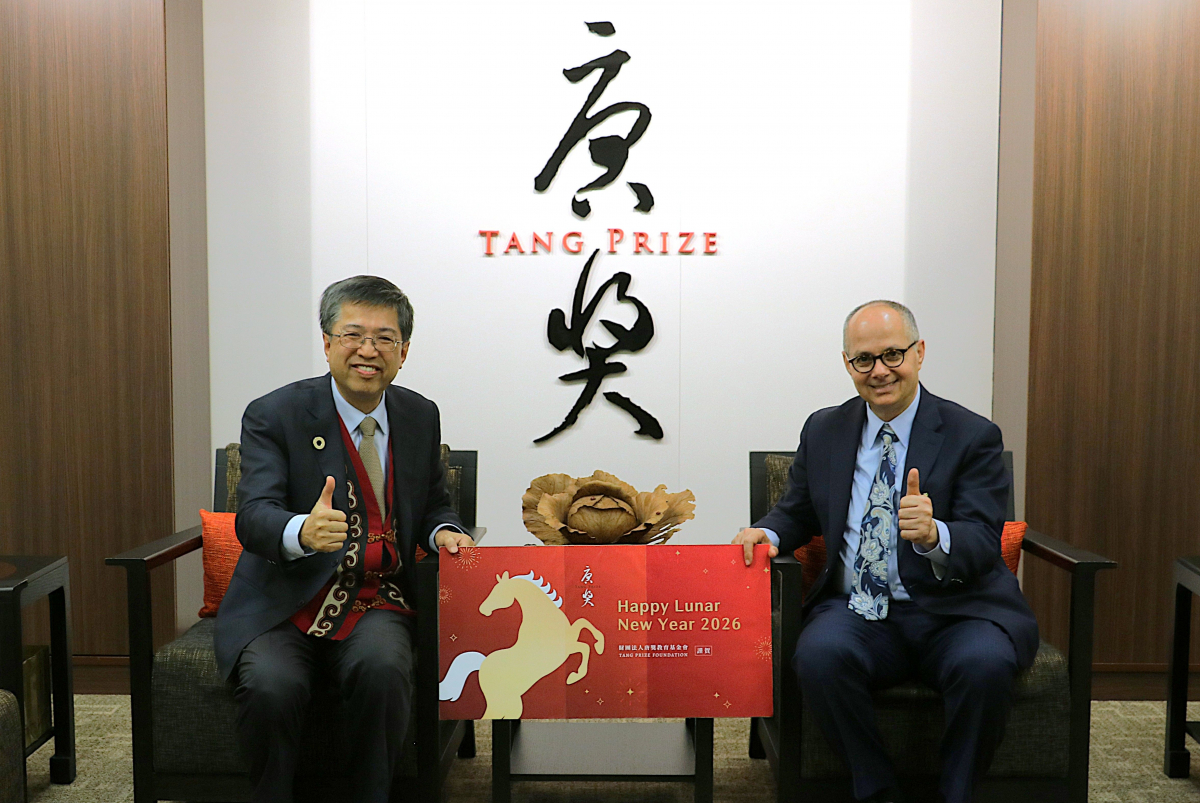
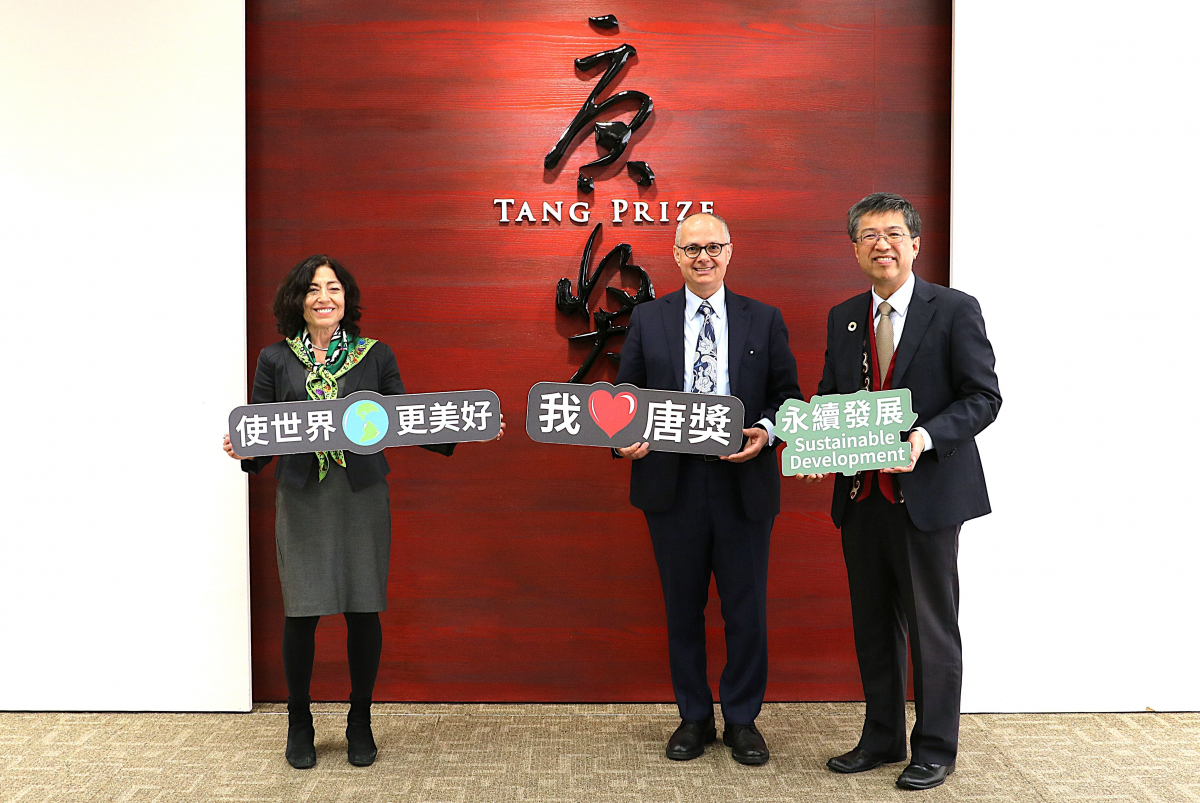
Professor Omar M. Yaghi, recipient of the 2024 Tang Prize in Sustainable Development, was invited to Taiwan to attend Healthcare Conference Taipei 2026. During his visit, he made a special trip back to his "Taiwan home"—the Tang Prize Foundation—to share the joy and honor of receiving the 2025 Nobel Prize in Chemistry this past October. This afternoon (February 12), Professor Yaghi, accompanied by Professor Jennifer Chayes, Dean of the College of Computing, Data Science, and Society at UC Berkeley, and two other distinguished guests from the university, visited the Foundation and received a warm welcome from CEO Dr. Jenn-Chuan Chern and the entire staff.
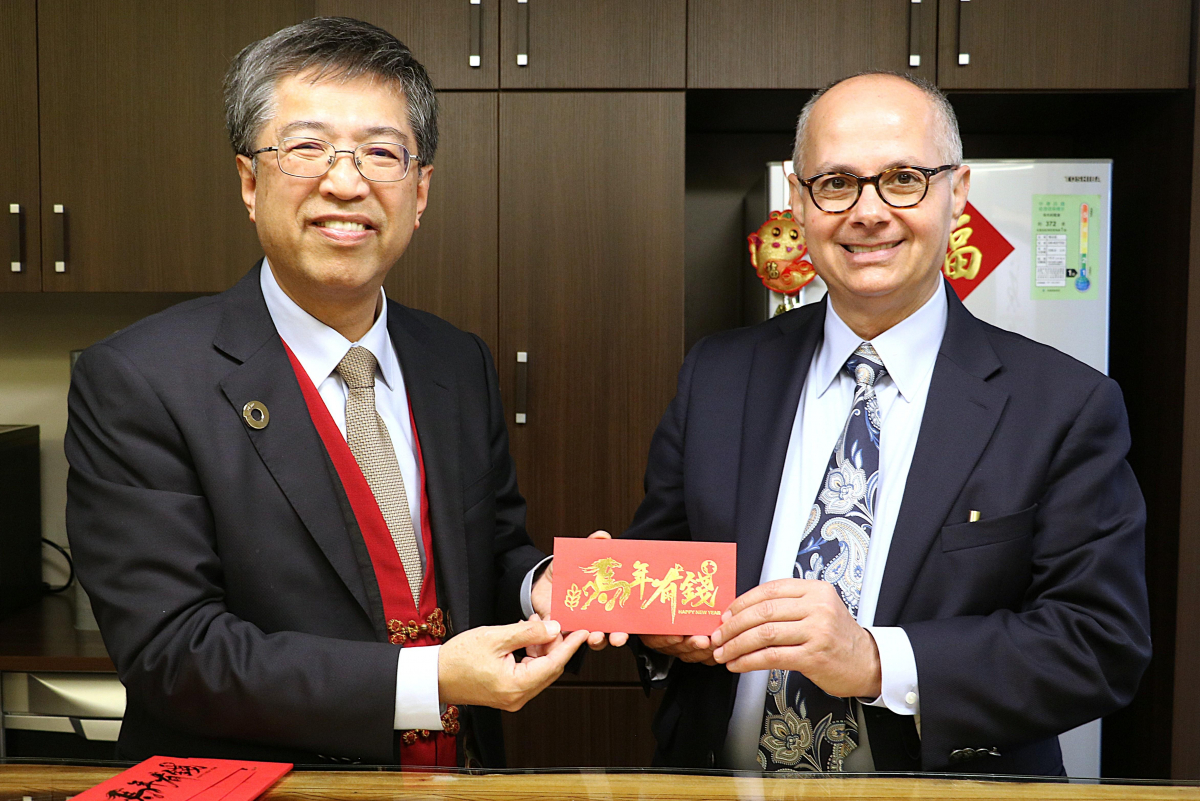
With the Lunar New Year approaching, Dr. Chern, on behalf of Tang Prize founder Dr. Samuel Yen-Liang Yin, presented Professor Yaghi with a traditional red envelope (hongbao), explaining its significance and wishing him vigor and success in the Year of the Horse. The Foundation also prepared festive treats symbolizing prosperity and good fortune—steamed rice cakes (fa gao) and sticky rice cakes (nian gao) representing "rising success," tangerines symbolizing "good luck and prosperity," and traditional New Year candies—allowing Professor Yaghi and his guests to experience the joyful spirit of Taiwan's Lunar New Year with an early celebration.
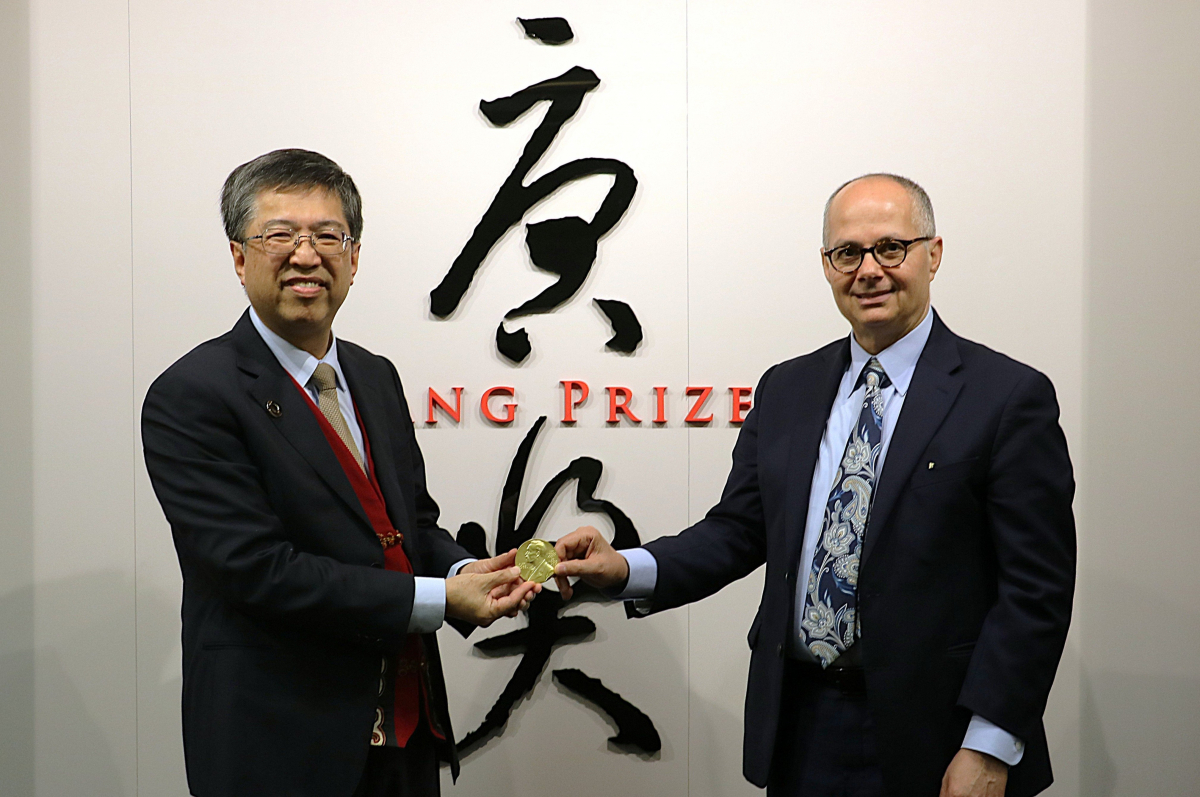
Professor Yaghi also specially brought his Nobel Prize medal from the United States to the Tang Prize Foundation to take photos with Dr. Chern and share in the honor. Dr. Chern expressed his deep admiration, noting that Professor Yaghi's groundbreaking contributions to metal-organic frameworks (MOFs) not only address critical sustainability challenges facing our world today but also have promising applications in biotechnology and pharmaceuticals. The future potential of MOFs and covalent organic frameworks (COFs) is truly exciting. Even more remarkable, Dr. Chern observed, is that despite his numerous accolades, Professor Yaghi remains humble and sincere. Two years ago, at the Tang Prize Master Forum and Youth Symposium, his inspiring story of courageously pursuing his dreams and persevering through challenges motivated many young people.
Professor Omar M. Yaghi shared the 2025 Nobel Prize in Chemistry with Professor Susumu Kitagawa (Kyoto University) and Professor Richard Robson (University of Melbourne). He becomes the seventh Tang Prize Laureate and the fourth instance in which a Tang Prize recipient has been recognized with a Nobel Prize. This distinguished group includes: James P. Allison and Tasuku Honjo, recipients of the inaugural 2014 Tang Prize in Biopharmaceutical Science, who won the 2018 Nobel Prize in Physiology or Medicine; Emmanuelle Charpentier and Jennifer A. Doudna, 2016 Tang Prize laureates in Biopharmaceutical Science, who won the 2020 Nobel Prize in Chemistry; and Katalin Karikó and Drew Weissman, 2022 Tang Prize laureates in Biopharmaceutical Science, who won the 2023 Nobel Prize in Physiology or Medicine.
About the Tang Prize
Since the advent of globalization, mankind has been able to enjoy the convenience brought forth by the advancement of human civilization and science. Yet a multitude of challenges, such as climate change, the emergence of new infectious diseases, the widening wealth gap, and moral degradation, have surfaced along the way. Against this backdrop, Dr. Samuel Yin established the Tang Prize in December 2012. It consists of four award categories, namely Sustainable Development, Biopharmaceutical Science, Sinology, and Rule of Law. Every other year, four independent and professional selection committees, comprising many internationally ren owned experts, scholars, and Nobel laureates, choose Tang Prize laureates who have made substantive contributions and a far-reaching impact on the world, regardless of ethnicity, nationality, or gender. A cash prize of NT$50 million (approx. US$1.7 million) is allocated to each category, with NT$10 million (approx. US$0.35 million) of it being a grant intended for research or educational outreach programs to encourage professionals in every field to examine mankind's most urgent needs in the 21st century, and become leading forces in the sustainable development of human society through their outstanding research outcomes and active civic engagement.