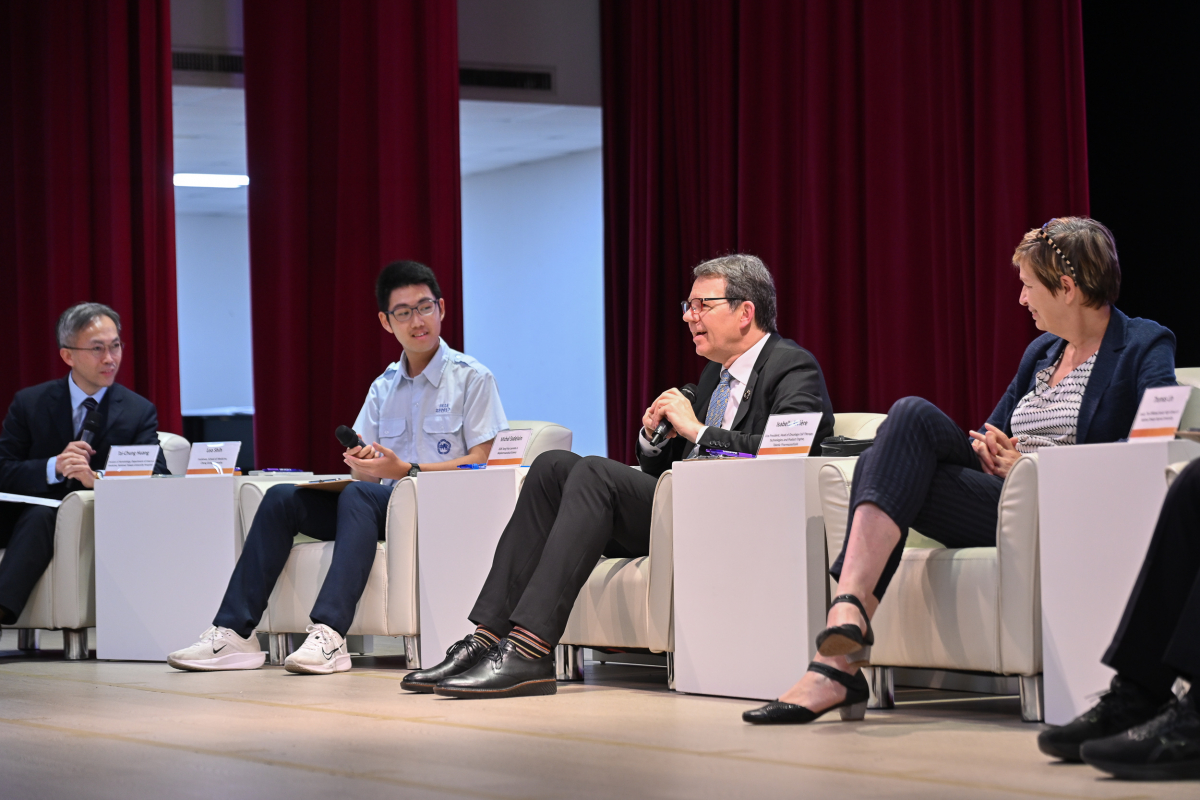
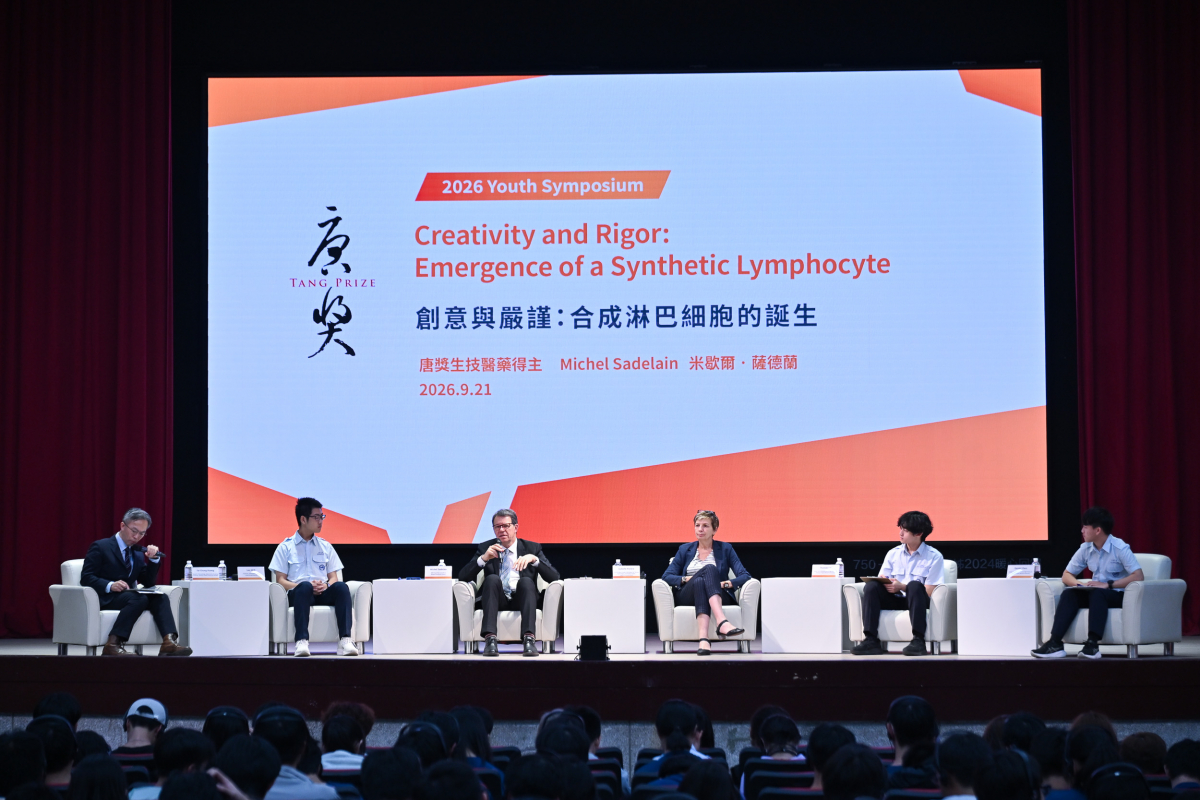
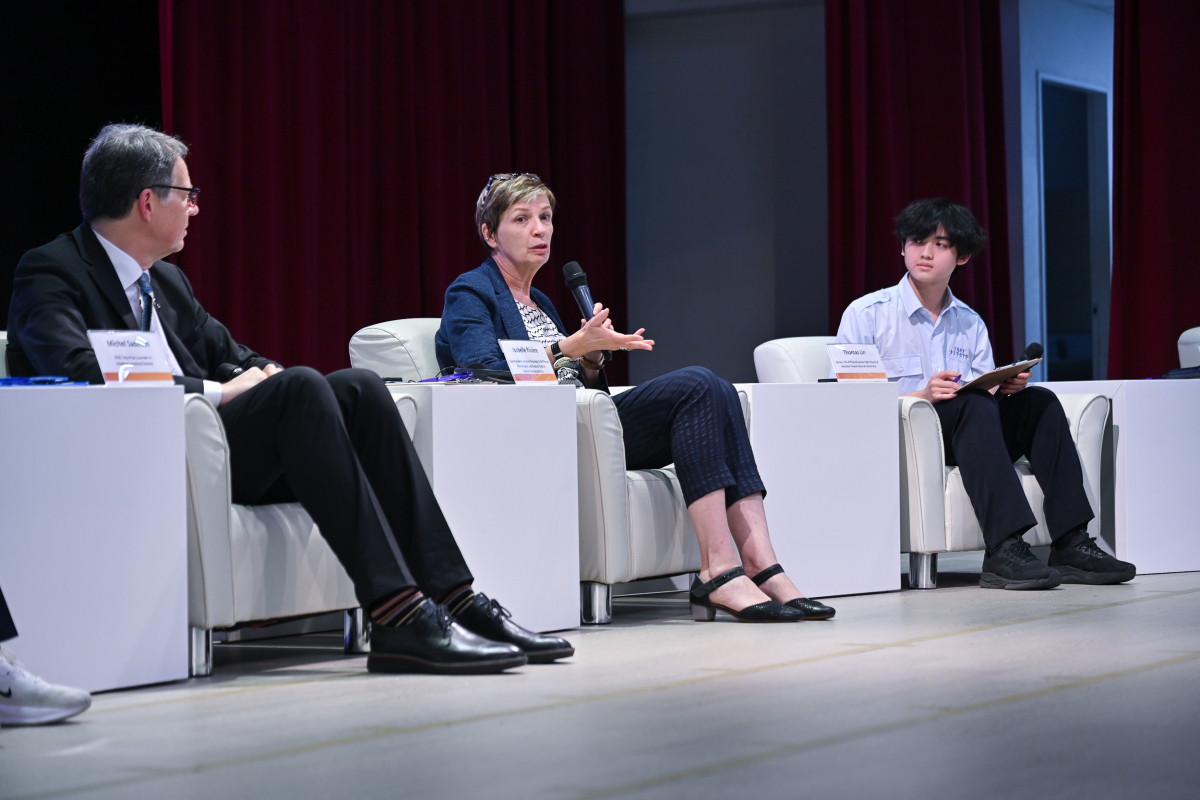
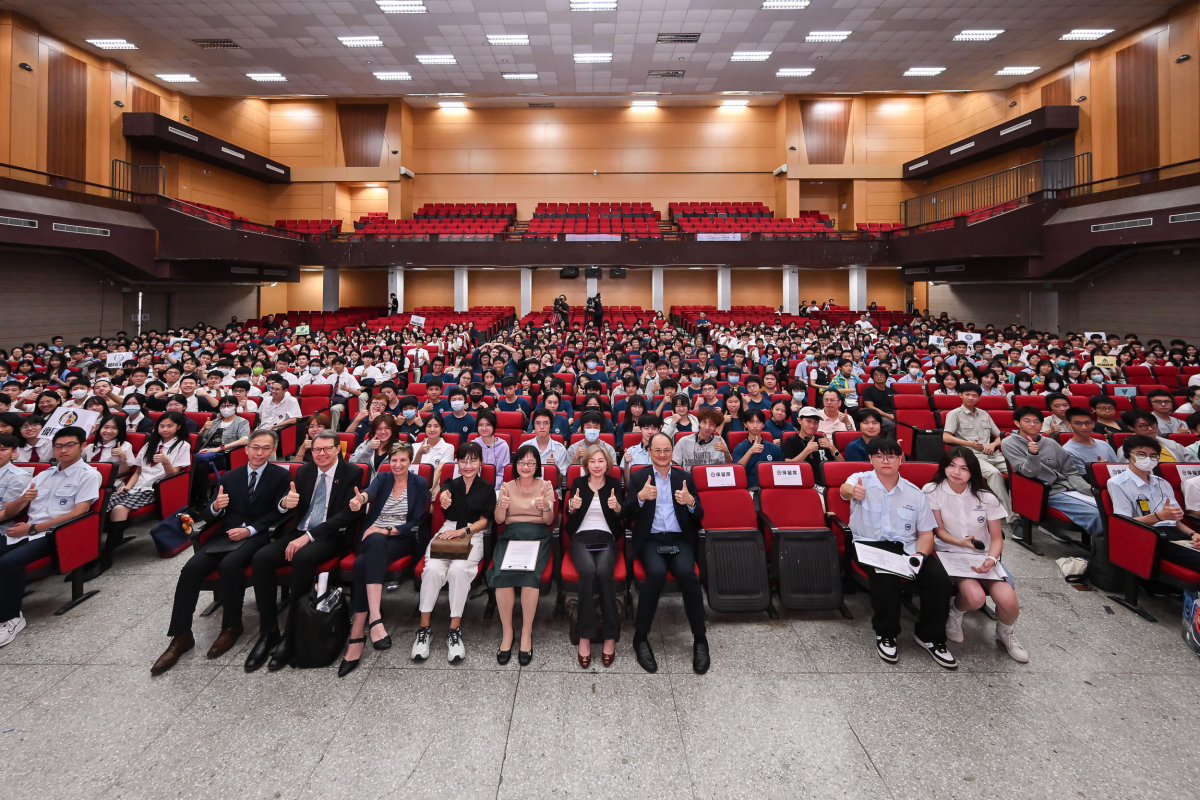
Michel Sadelain, a 2026 Tang Prize laureate in Biopharmaceutical Science, met with nearly 700 high school students on September 21 at a Tang Prize Youth Symposium jointly organized by the Tang Prize Foundation and the Affiliated Senior High School of National Taiwan Normal University (HSNU). HSNU Principal Chun-Ying Liao moderated the event, which brought together students from more than 10 high schools across Taipei, New Taipei, Keelung, and Yilan. Participating schools included HSNU, Taipei Municipal Chien Kuo High School, Taipei First Girls High School, Taipei Municipal Zhongshan Girls High School, National Keelung Senior High School, National Yilan Senior High School, and National Lan-Yang Girls’ Senior High School. Students on stage took part in a Q&A with Sadelain and Dr. Isabelle Rivière, while students in the audience joined in enthusiastically, submitting 40 questions via Slido.
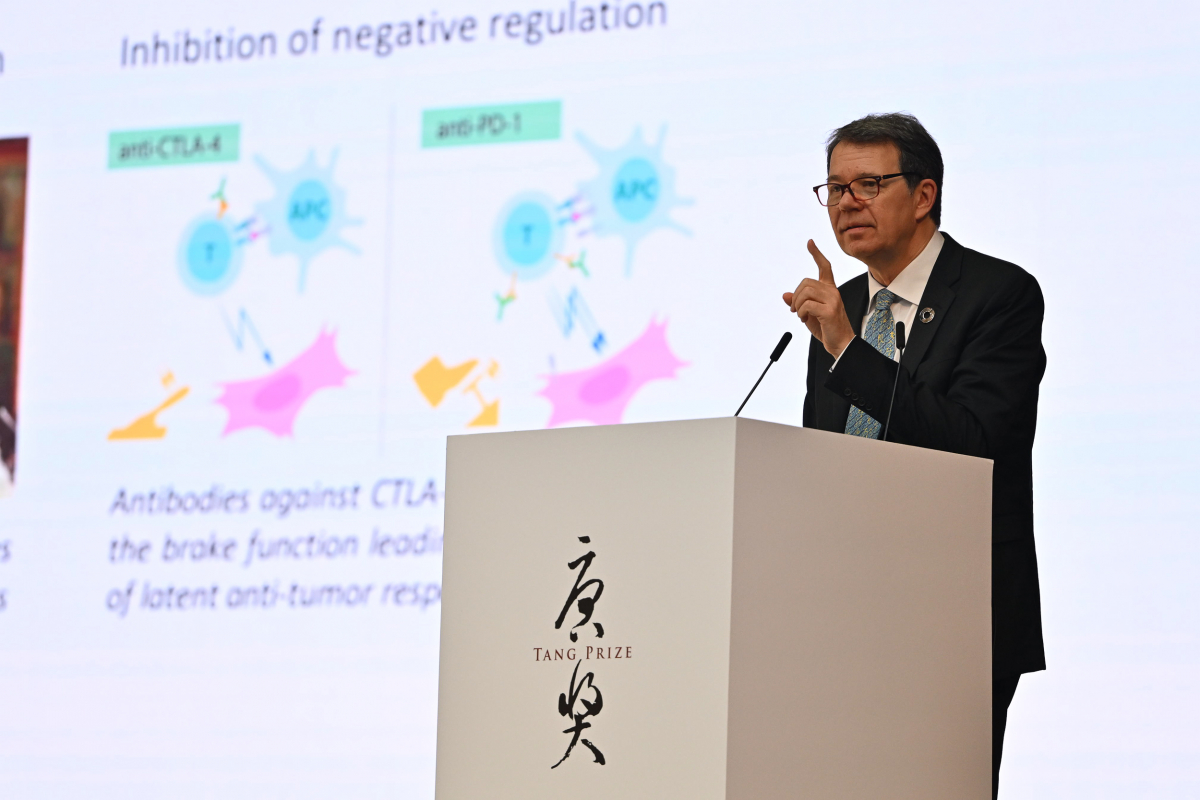
Sadelain opened with a lecture titled “Creativity and Rigor: Emergence of a Synthetic Lymphocyte,” exploring the human immune system, the origins of CAR T cell therapy, and its future directions. He showed how ideas that challenge conventional scientific thinking can, with rigorous research and teamwork, be developed step by step into treatments that benefit patients.
The human body is continuously exposed to a variety of pathogens, Sadelain explained. T cells can recognize abnormalities and initiate immune responses, but natural immunity has its limits. He described how cell engineering can equip T cells with chimeric antigen receptors (CARs)—synthetic receptors for antigen that reprogram immune cells to perform therapeutic tasks. The resulting synthetic T cells do not occur in nature and can recognize and attack specific cancer cells.
Bringing CAR T cell therapy from a bold scientific concept into clinical practice has required both creativity and rigor. Sadelain described how the research team refined CAR designs, incorporated costimulatory signals to enhance T cell function, and identified CD19 as an effective CAR target. Through laboratory research and clinical validation, CD19 CAR T cells emerged as a major breakthrough in treating certain hematological malignancies, or blood cancers. He also discussed the potential of next-generation CAR T cells to treat autoimmune diseases and other conditions, along with the challenges that remain. He encouraged students to embrace creativity, scientific rigor, and teamwork, emphasizing that even with the advances made possible by CAR T cells, there is still much for the next generation to discover.
Dr. Isabelle Rivière, a renowned CAR T cell researcher and Sadelain’s wife, was also invited to join the discussion. Her reflections on her research and life offered particular encouragement to the young women in the audience. Students wanted to know whether life as a scientist had matched what the two had imagined when they were young. Rivière recalled that she had once considered becoming a physician or an archaeologist and had not expected research to become a lifelong passion. No matter how difficult the work became, she never lost sight of her desire to find new treatments for patients. That purpose, she said, was what got her out of bed each morning. Sadelain spoke of his enduring curiosity about the unknown, the unexpected discoveries that science can bring, and the opportunities to exchange ideas with researchers from different cultures around the world. These, he said, were all reasons for his love of research.
Asked how to persevere through the failures and moments of discouragement that research inevitably brings, Sadelain compared scientific research to a marathon. Significant results do not come overnight, he stressed, and experiments often fall short of expectations. Researchers need to learn to accept failure and remain humble and resilient. Yet the joy and sense of achievement when a breakthrough finally comes can make the long, frustrating process worthwhile. Rivière encouraged students to remember why they had chosen research in the first place, especially when the work became difficult. She recalled that seeing patients in hospital corridors while working on new treatments reminded her of the people she wanted to help. Exchanging ideas within a team and seeking advice from researchers in other fields were also important sources of support along the way.
The discussion also turned to whether young people should specialize early or explore a range of fields. Sadelain said there was no single answer that would suit everyone. He encouraged students to stay open-minded and seek out knowledge and ideas across disciplines, since what they learn and experience along the way can shape their thinking and imagination. Rivière drew on her own early career, recalling a particularly challenging project investigating treatments for HIV. That work took her to the Massachusetts Institute of Technology (MIT) to learn gene transfer techniques. Although the original project did not lead to a treatment, the experience became an important foundation for her later research. She encouraged students to explore subjects that genuinely interest and inspire them while maintaining scientific rigor.
About the Tang Prize
Since the advent of globalization, humanity has enjoyed unprecedented benefits from advances in civilization and science. Yet a multitude of challenges, such as climate change, the emergence of new infectious diseases, the widening wealth gap, and moral degradation, have surfaced along the way. Against this backdrop, Dr. Samuel Yin established the Tang Prize in December 2012. It consists of four award categories: Sustainable Development, Biopharmaceutical Science, Sinology, and Rule of Law. Every two years, four independent and professional selection committees, comprising many internationally renowned experts, scholars, and Nobel laureates, choose Tang Prize laureates who have made substantive contributions and generated a far-reaching impact on the world, regardless of race, nationality, gender, or religion. A cash prize of NT$50 million (approximately US$1.6 million) is allocated to each category, with NT$10 million (approximately US$320,000) of it being a grant intended for research or educational outreach programs to encourage professionals in every field to examine mankind's most urgent needs in the 21st century, and become leading forces in the sustainable development of human society through their outstanding research outcomes and active civic engagement.