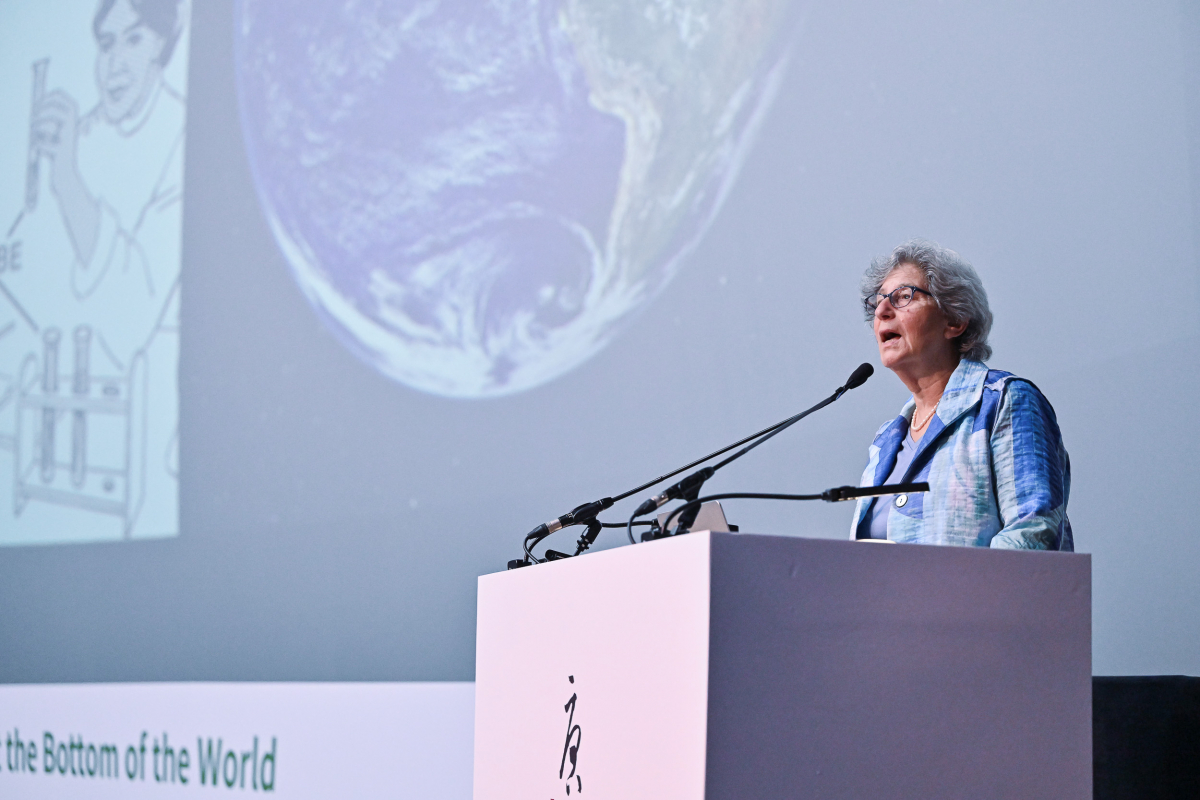
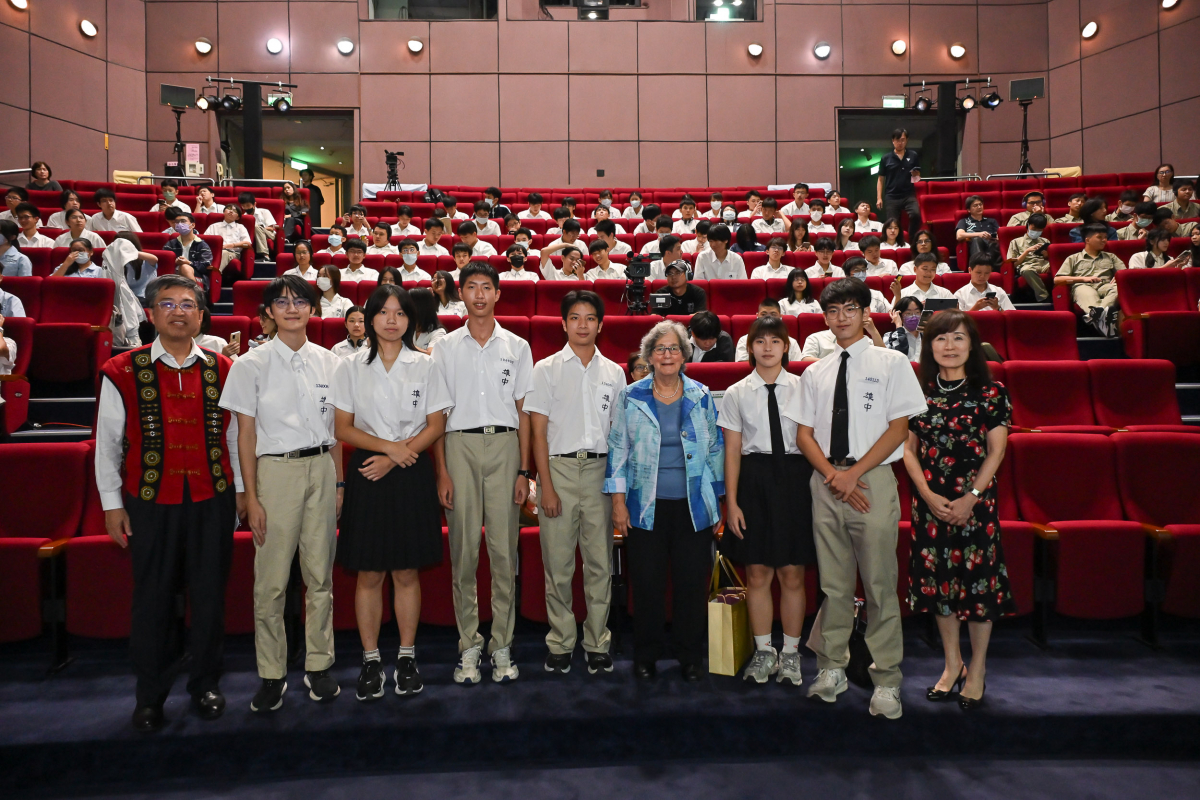
Professor Susan Solomon, the 2026 Tang Prize laureate in Sustainable Development, participated in the Tang Prize Youth Symposium, co-hosted by the Tang Prize Foundation and Kaohsiung Municipal Kaohsiung Senior High School, on September 22. At the National Science and Technology Museum in Kaohsiung, she met in person with 250 high school students from five schools: National Chiayi Senior High School, National Tainan First Senior High School, Kaohsiung Municipal Kaohsiung Senior High School, Kaohsiung Municipal Kaohsiung Girls’ Senior High School, and the Affiliated Senior High School of National Kaohsiung Normal University. In a talk titled “Doing Science for the Planet at the Bottom of the World,” Solomon took students back to Antarctica in the 1980s, recounting how, as a young scientist, she ventured to the far reaches of the planet to search for scientific evidence under extreme conditions, piece together the mystery of the ozone hole, and show how scientific discovery can move from research to global action, with different sectors working together to protect the planet.
In 1986, Solomon traveled to Antarctica to investigate what was causing the Antarctic ozone hole. Using photographs from the expedition, she took students back on that scientific journey to the “bottom of the world”: working in temperatures around −40°F, bundled in heavy cold-weather gear, while she and her team sent instruments aloft into the stratosphere and repeatedly took measurements in search of clues. The data soon revealed a striking pattern. Ozone levels that remained normal in August fell rapidly in September; at altitudes of roughly 14 to 20 kilometers, where the clouds were densest, ozone concentrations dropped to nearly zero in just a few weeks. By tracing these “fingerprints” across time and space and comparing multiple independent measurements obtained through different methods, the research team gradually assembled the evidence needed to unravel how chlorine from chlorofluorocarbons (CFCs), together with extreme cold, polar stratospheric clouds, and sunlight, could drive severe ozone loss.
Solomon also showed students that science is not only about finding answers. Communicating complex science in ways people can understand and helping society grasp why a problem matters are equally important. Through simple, striking images of the ozone hole and clear scientific “fingerprints” across time and space, an otherwise highly technical problem in atmospheric science became a global crisis that both the public and policymakers could understand. As the scientific evidence accumulated and a broader consensus emerged, the international community agreed to the Montreal Protocol and began phasing out CFCs. Solomon described the process as “It Took a Village,” emphasizing that science, governments, the public, industry, and technology all had essential roles to play. Only when science reaches society and different groups come together to act, she emphasized, can real change become possible.
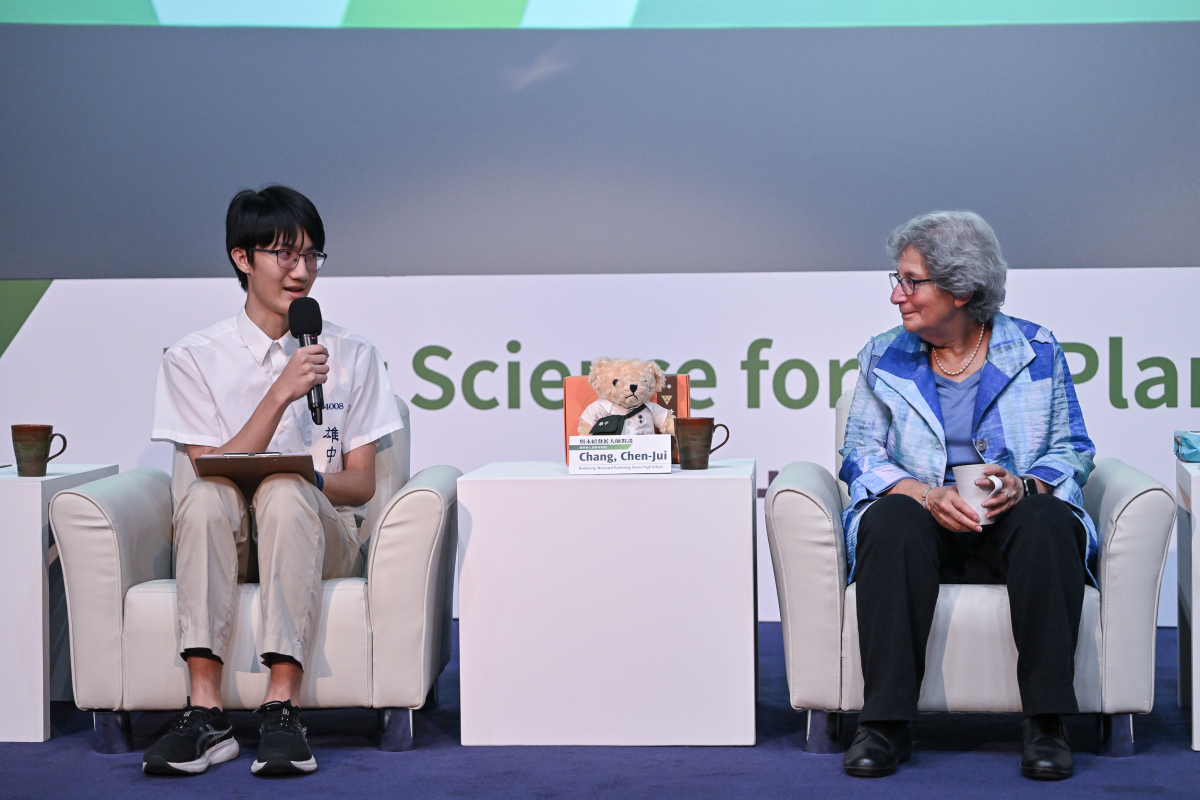
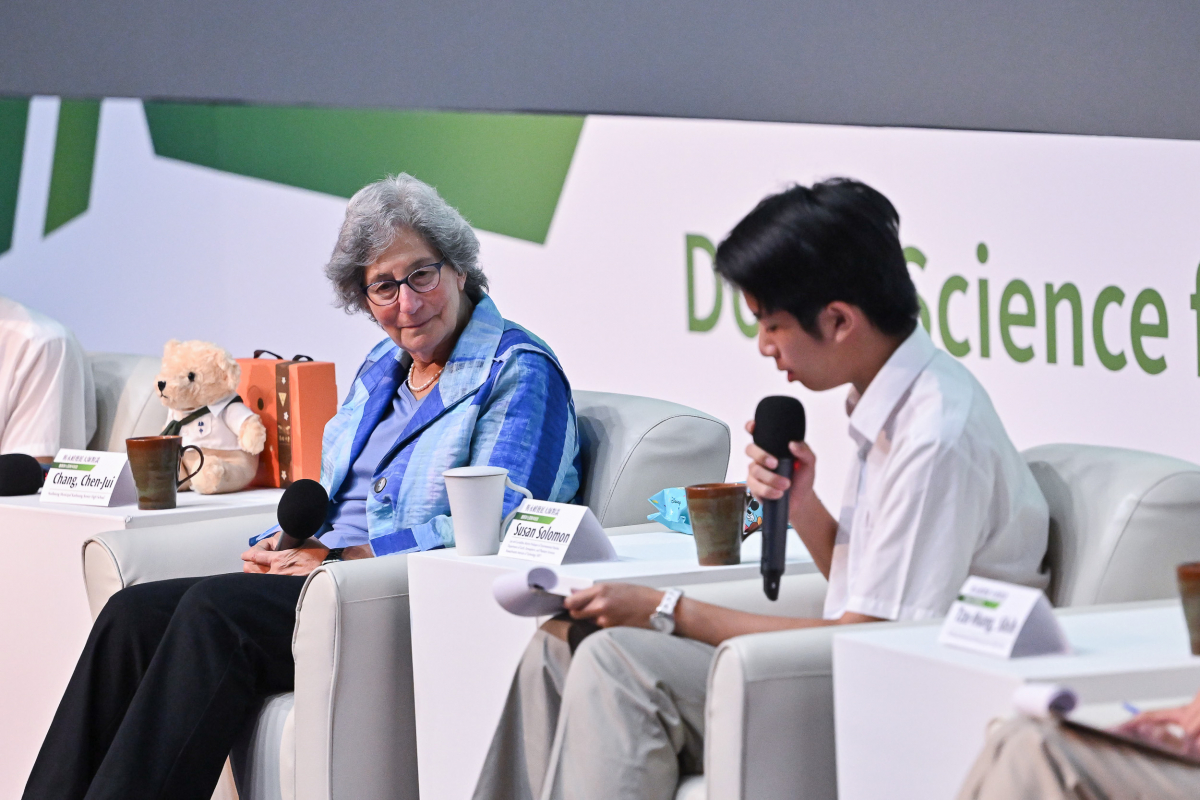
Following the lecture, former National Cheng Kung University President Huey-Jen Jenny Su, a longtime advocate for sustainable development, moderated a dialogue between Solomon and the students. Four students from Kaohsiung Municipal Kaohsiung Senior High School asked questions ranging from atmospheric chemistry and Antarctic field research to climate change and global environmental action. They also asked how she persevered in the face of skepticism and setbacks in scientific research, and what abilities and attitudes are most important for young people who hope to pursue science.
Reflecting on how she responded to skepticism and setbacks in her research, Solomon said that skepticism toward new findings is a fundamental part of science, particularly when research challenges established frameworks and is therefore more likely to draw criticism and opposition. When faced with skepticism, she said, scientists should not retreat simply because they feel discouraged, but should remain patient, keep communicating, and respond with more evidence. Drawing on her own work, she recalled that after she proposed a mechanism in which chemical reactions on polar stratospheric clouds could contribute to ozone depletion, other scientists tested the idea further in the laboratory, gradually building a larger body of evidence. She encouraged students to be patient, collaborate with scientists across disciplines, and continue accumulating evidence. Scientific criticism, she added, is itself part of how science works, so long as it is grounded in reason and mutual respect.
Turning to the qualities young scientists need, Solomon encouraged young people to “think outside the box.” Rather than simply repeating what is already known, they should consider what other possibilities may lie beyond established knowledge. She pointed to her own work on polar stratospheric clouds. At the time, scientists focused mainly on gas-phase reactions in the stratosphere; she instead asked whether surfaces such as ice crystals in clouds might also take part in chemical reactions, looking beyond conventional assumptions for new possibilities.
Solomon also emphasized communication and collaboration as essential skills for scientists. She said that scientists are fortunate to be able to pursue research they love, and that they also have a responsibility to think about how to explain complex science clearly. She encouraged students to strengthen their writing, language, and cross-cultural communication skills; learn to build a clear argument, support it with evidence, draw a conclusion, and make their reasoning easy to follow. When working with others, she added, scientists should respect the different contributions each person can bring, remain open and enthusiastic, and even serve as the team’s “cheerleader,” inspiring colleagues through genuine enthusiasm.
【ABOUT THE TANG PRIZE】
Since the advent of globalization, humanity has enjoyed unprecedented benefits from advances in civilization and science. Yet a multitude of challenges, such as climate change, the emergence of new infectious diseases, the widening wealth gap, and moral degradation, have surfaced along the way. Against this backdrop, Dr. Samuel Yin established the Tang Prize in December 2012. It consists of four award categories: Sustainable Development, Biopharmaceutical Science, Sinology, and Rule of Law. Every two years, four independent and professional selection committees, comprising many internationally renowned experts, scholars, and Nobel laureates, choose Tang Prize laureates who have made substantive contributions and generated a far-reaching impact on the world, regardless of race, nationality, gender, or religion. A cash prize of NT$50 million (approximately US$1.6 million) is allocated to each category, with NT$10 million (approximately US$320,000) of it being a grant intended for research or educational outreach programs to encourage professionals in every field to examine mankind's most urgent needs in the 21st century, and become leading forces in the sustainable development of human society through their outstanding research outcomes and active civic engagement.