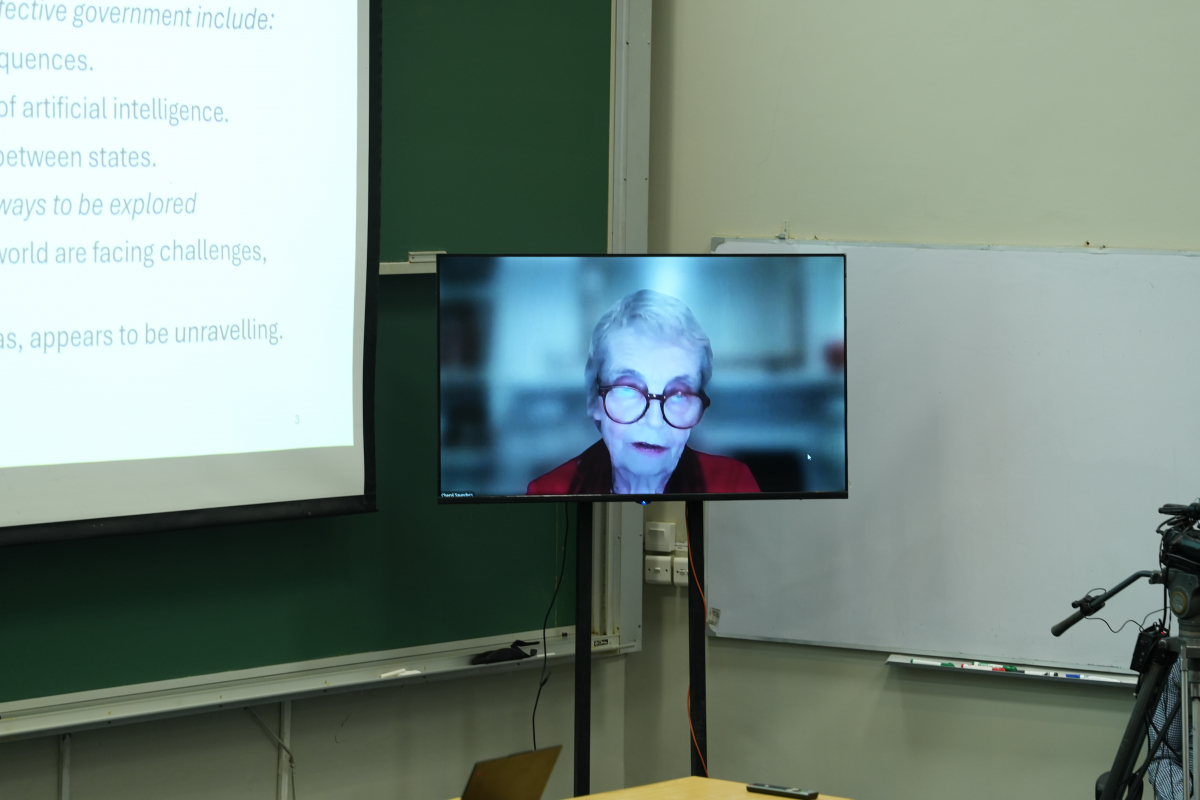
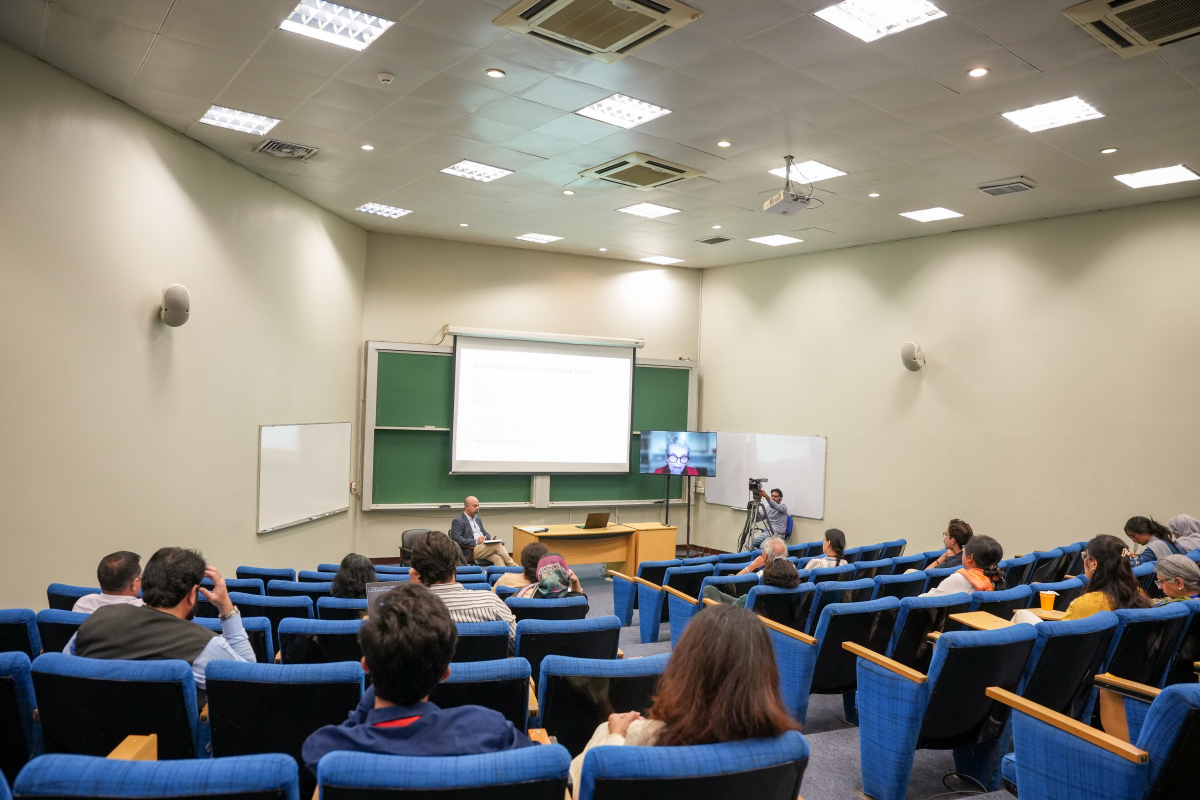
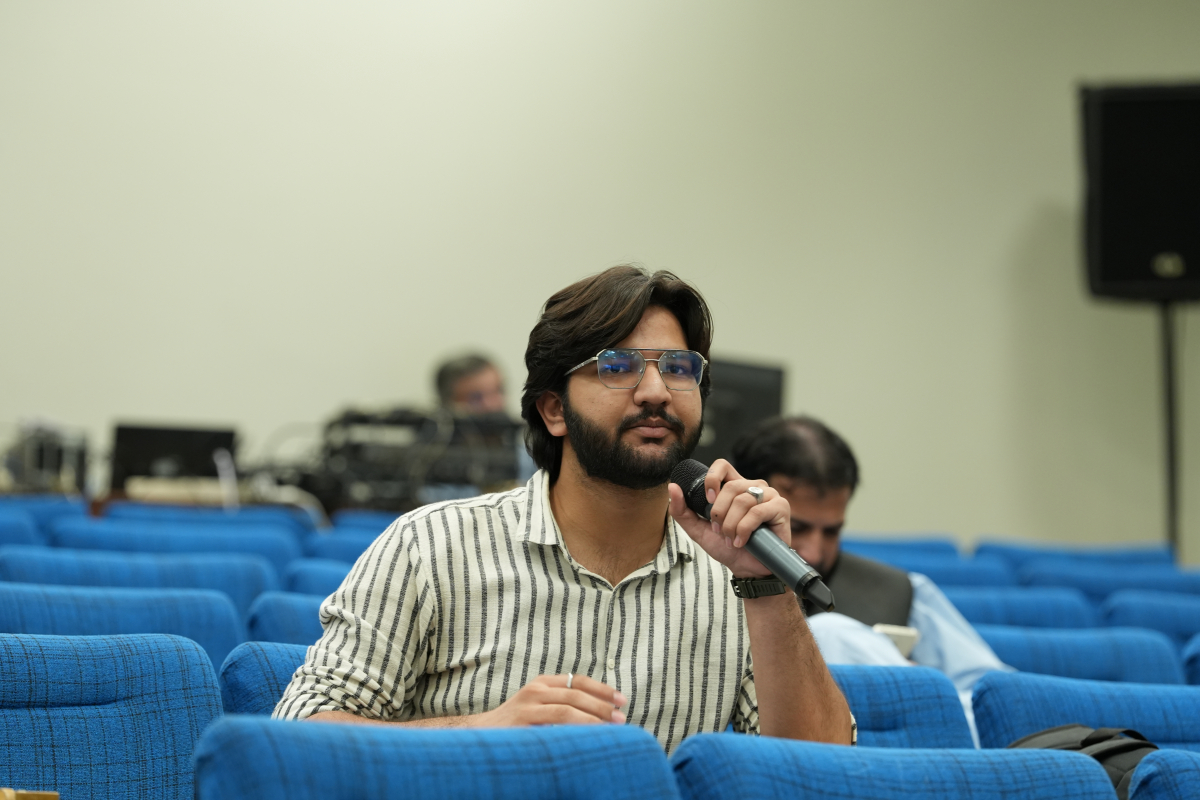
Following Tang Prize Lectures at AAS-in-Asia delivered by Professor Wang Gungwu, the 2020 Tang Prize laureate in Sinology, in June 2023, and Professor Dame Jessica Rawson, the 2022 Sinology laureate, in July 2024, the Tang Prize Foundation was once again invited to present a lecture at this year's conference, held September 25–27 at Lahore University of Management Sciences (LUMS) in Lahore, Pakistan. The 2026 lecture marked the first time Rule of Law took center stage, featuring Professor Cheryl Saunders, the 2022 Tang Prize laureate in Rule of Law and Laureate Professor Emerita at the University of Melbourne. Joining remotely, Professor Saunders delivered an address titled “Constitutions at a Global Crossroads” and discussed the contemporary challenges and future of constitutional governance with participants attending in person and online.
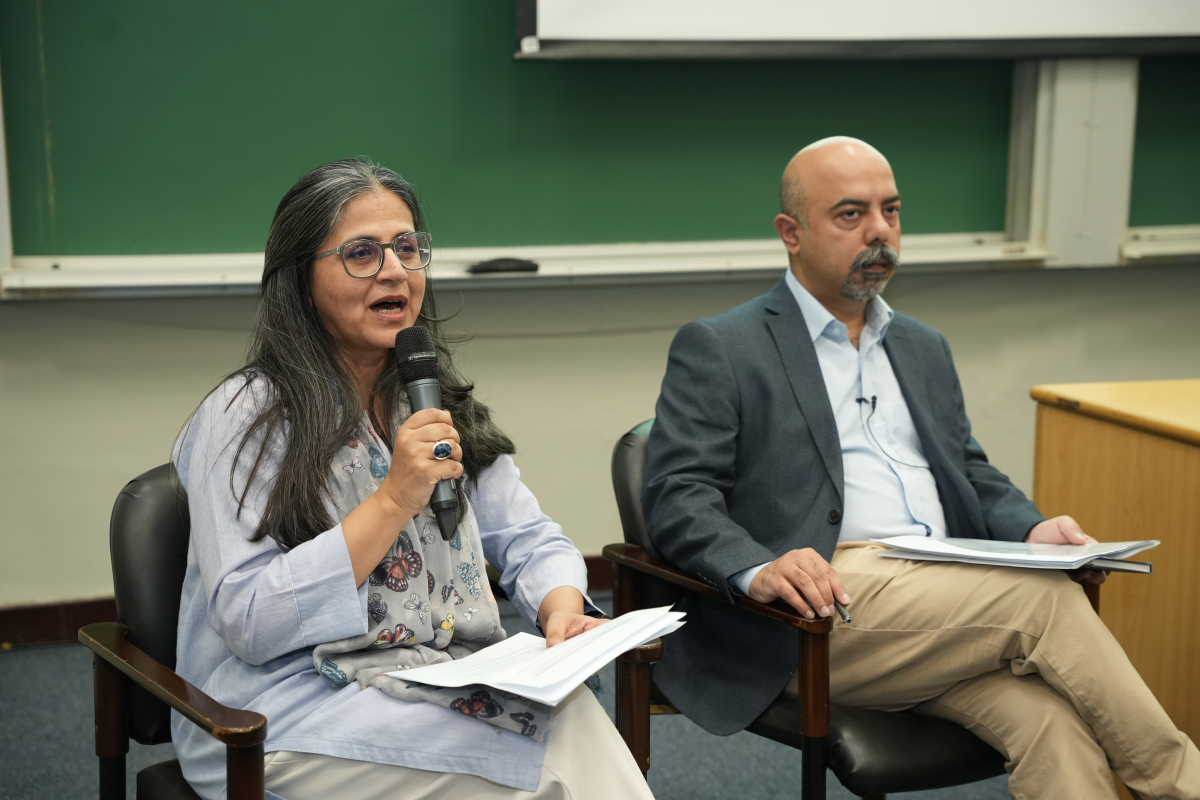
The AAS-in-Asia Conference, co-hosted by LUMS and the Association for Asian Studies (AAS), is a major annual gathering for the international Asian studies community. This year's event brought together more than 1,000 scholars, students, artists, and professionals from 37 countries. At the Tang Prize Lecture on September 26, Professor Saunders was joined in conversation by Professor Raza Saeed, Shaikh Ahmad Hassan School of Law at LUMS. His research focuses on human rights and socio-legal studies, particularly in postcolonial and Global South contexts. Professor Saunders identified three pressing governance challenges: the worsening climate crisis, rapid technological advances exemplified by artificial intelligence, and growing economic inequalities within and between states and regions. Yet the governance itself also faces two intertwined challenges: democratic backsliding and the unraveling of the international legal and political order.
Examining what she described as the “inward” and “external” faces of constitutions, Professor Saunders then drew on examples from South Asia to explore the challenges, opportunities, and possible paths forward for contemporary constitutional governance. Domestically, several countries in the region embarked on new constitution-making processes after the Cold War, but their experiences have varied. Bhutan offers a relatively successful example, while Afghanistan's constitution was abrogated and Nepal has recently seen nationwide protests. Meanwhile, amid the expansion of international cooperation and assistance mechanisms, as well as the growing influence of major powers, including the United States and China, in the region, the more recent Maldivian and Nepalese constitutions include more explicit provisions on legislative involvement and safeguards in the exercise of external state authority, in contrast to the earlier Indian and Pakistani constitutions, which largely leave external affairs to the executive.
Professor Saunders further observed that crises can also generate fresh ideas and opportunities for change. Dissatisfaction with existing constitutional arrangements can encourage societies to consider alternative institutional designs and rethink the future of constitutionalism. Governance issues requiring international cooperation may also give smaller states and middle powers greater opportunities to play an active role in global affairs. At the same time, she emphasized that constitutional challenges arise from both local circumstances and global developments. There is no single blueprint; countries must draw on their own experiences while learning from those of others.
2022 Tang Prize in Rule of Law is awarded to Prof. Cheryl Saunders to recognize “her pioneering contributions to comparative constitutional law, and in particular her work on constitution-building in the Asia-Pacific region”. In the citation, the Selection Committee paid tribute to her working methods, noting that she applies “her scholarship to inspire and advise constitution-making exercises, often under challenging circumstances”, and that she “consistently broadens the boundaries of comparative constitutional law scholarship through active engagement, dialogue and collaboration with scholars and political actors at home and abroad.”
Comparative constitutional scholarship has traditionally focused on developments in Europe and North America. As global economic and geopolitical dynamics have shifted, however, the Asia-Pacific region has become increasingly significant. Its ethnic diversity, large populations, complex histories and cultures, and varied political systems pose substantial challenges for constitutional reform. By working closely with networks of local experts and scholars, Professor Saunders has drawn on local histories, cultures, customs, and the perspectives of grassroots decision-makers and made considerable contributions to the region’s constitution-building. She has inspired those seeking social change through constitutional reform and reflected the Tang Prize's close ties, as an international award established in Taiwan, with communities throughout the Asia-Pacific.
Watch the lecture (in English):
https://www.youtube.com/watch?v=ejCaJNMGFlY
About the Tang Prize
Since the advent of globalization, humanity has enjoyed unprecedented benefits from advances in civilization and science. Yet a multitude of challenges, such as climate change, the emergence of new infectious diseases, the widening wealth gap, and moral degradation, have surfaced along the way. Against this backdrop, Dr. Samuel Yin established the Tang Prize in December 2012. It consists of four award categories: Sustainable Development, Biopharmaceutical Science, Sinology, and Rule of Law. Every two years, four independent and professional selection committees, comprising many internationally renowned experts, scholars, and Nobel laureates, choose Tang Prize laureates who have made substantive contributions and generated a far-reaching impact on the world, regardless of race, nationality, gender, or religion. A cash prize of NT$50 million (approximately US$1.6 million) is allocated to each category, with NT$10 million (approximately US$320,000) of it being a grant intended for research or educational outreach programs to encourage professionals in every field to examine mankind's most urgent needs in the 21st century, and become leading forces in the sustainable development of human society through their outstanding research outcomes and active civic engagement.