This year, the Tang Prize in Biopharmaceutical Science focuses on cellular immunotherapy, a revolutionary treatment that uses a patient's own immune cells (including genetically modified CAR-T cells) to combat cancer. The impact of the three laureates' discoveries is profound. Since the first FDA approval in 2017, CAR-T cell therapy has already benefited over 30,000 patients with blood cancers worldwide. These therapies provide life-saving options for patient with recurrent and/or refractory blood cancers. Furthermore, TIL therapy has established a new option for treating advanced solid tumors, especially metastatic melanoma. By turning the patient's immune system into a powerful medicine, these breakthroughs have profoundly changed how cancer is treated today.
Dr. Rosenberg, the "father of cancer immunotherapy" and Chief of the Surgery Branch at the National Cancer Institute, developed adoptive cell transfer (ACT) and was the first to demonstrate that transferring a patient's own immune cells could shrink metastatic tumors. His pioneering work identifying TIL and using interleukin-2 (IL-2) to stimulate immune responses laid the foundation for all subsequent cellular therapies. In the 1990s, he achieved another milestone by receiving the first regulatory approval to introduce exogenous genes into human patients. Dr. Sadelain and Dr. June, they both pioneered the development of CAR-T cell therapy. Dr. Sadelain discovered that integrating a CD28 co-stimulatory domain alongside the CD3ζ chain yielded T cells with therapeutic potential, establishing the core architecture that has become the standard framework for all subsequently FDA-approved CAR-T therapies. He identified CD19 as a therapeutic target for B-cell malignancies and first demonstrated that human CD19 CAR-T cells could treat cancer in mice. Dr. June developed the anti-CD3/CD28 magnetic bead expansion protocol, enabling robust ex vivo T-cell expansion that became the manufacturing standard for CAR-T cells. He also helped develop CAR constructs incorporating the 4-1BB (CD137) co-stimulatory domain to enhance T-cell proliferation and long-term survival. He then led pioneering clinical trials of CD19-targeted CAR-T cells, achieving durable remissions in patients with CLL and ALL. His partnership with Novartis culminated in Kymriah becoming the first FDA-approved CAR-T therapy in 2017, marking a pivotal step in bringing CAR-T therapy from research into clinical medicine.
We are honoring these three brilliant scientists—Steven A. Rosenberg, Michel Sadelain, and Carl H. June—who laid the foundation of this remarkable therapeutic revolution through their key groundbreaking discoveries. The selection committee acknowledges that from basic discoveries to therapeutic applications is a long journey and many scientists in academia and industry are involved. Following the "3-awardees" guideline, the committee selected as the most deserving recipients of the 2026 Tang Prize in Biopharmaceutical Science.
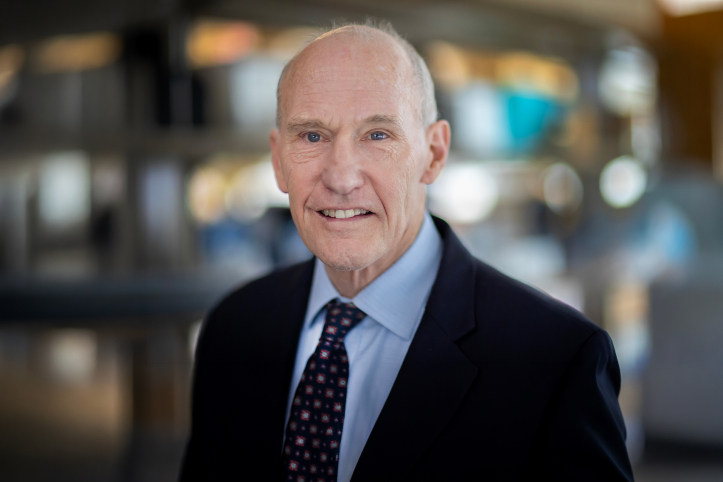
• June CV (Provided by Prof. June)
Contact Info
Address: 3400 Civic Center Blvd Smilow Center for Translational Research Philadelphia, PA 19104-5156 USA
Email: cjune@upenn.edu
Date of Birth: -
Place of Birth: -
Nationality: American
Field of Specialization: Medicine and Immunotherapy
Education
|
1975
|
B.S., United States Naval Academy, USA (Biology)
|
|
1979
|
M.D., Baylor College of Medicine, USA (Medicine)
|
Professional Experience
|
2018–Present
|
Visiting Professor, Graduate School of Medicine, Chiba University, Japan
|
|
2016–Present
|
Director, Parker Institute for Cancer Immunotherapy, University of Pennsylvania
|
|
2015–Present
|
Director, Center for Cellular Immunotherapies, University of Pennsylvania
|
|
2012–Present
|
Richard W. Vague Professor in Immunotherapy, University of Pennsylvania School of Medicine
|
|
2004–Present
|
Professor of Medicine (Secondary), University of Pennsylvania School of Medicine
|
|
2001–2012
|
Professor of Pathology and Laboratory Medicine, University of Pennsylvania School of Medicine
|
|
1999–Present
|
Director, Translational Research Program, University of Pennsylvania
|
|
1999–Present
|
Licensed Physician, Commonwealth of Pennsylvania
|
|
1999–2001
|
Professor of Molecular and Cellular Engineering, University of Pennsylvania School of Medicine
|
|
1995–1999
|
Professor, Department of Medicine, Uniformed Services University of the Health Sciences
|
|
1990–1995
|
Associate Professor, Department of Medicine, Uniformed Services University
|
|
1986–1990
|
Assistant Professor, Department of Medicine, Uniformed Services University
|
|
1983–1985
|
Fellow in Oncology, University of Washington and Fred Hutchinson Cancer Research Center
|
|
1982–1983
|
Instructor, Department of Medicine, Uniformed Services University
|
|
1982–1983
|
Chief Resident: Internal Medicine, National Naval Medical Center, Bethesda, Maryland
|
|
1980–1982
|
Teaching Fellow, Department of Medicine, Uniformed Services University
|
|
1980–1982
|
Residency: Internal Medicine, National Naval Medical Center, Bethesda, Maryland
|
|
1979–1980
|
Internship: Basic Medicine, National Naval Medical Center, Bethesda, Maryland
|
|
1978–1979
|
Research Fellow, World Health Organization Immunology Research and Training Center, Geneva, Switzerland
|
|
1975–1996
|
United States Navy Medical Officer
|
Awards & Recognition (selected)
|
2025
|
Balzan Prize in Medicine
|
|
2025
|
J. Allyn Taylor International Prize in Medicine
|
|
2025
|
Richard N. Merkin Prize in Biomedical Technology
|
|
2024
|
Breakthrough Prize in Life Sciences
|
|
2024
|
VinFuture Prize
|
|
2024
|
Warren Alpert Foundation Prize
|
|
2023
|
Lifetime Achievement in Cancer Research, American Association for Cancer Research (AACR)
|
|
2022
|
Keio Medical Science Prize
|
|
2021
|
Dan David Prize in Molecular Medicine
|
|
2021
|
Sanford Lorraine Cross Award
|
|
2020
|
Elected Member, National Academy of Sciences
|
|
2019
|
Harrington Prize, American Society for Clinical Investigation
|
|
2018
|
Albany Medical Center Prize in Medicine and Biomedical Research
|
|
2017
|
Karnofsky Prize, American Society of Clinical Oncology (ASCO)
|
|
2016
|
Novartis Prize for Immunology
|
|
2015
|
Paul Ehrlich and Ludwig Darmstaedter Prize
|
|
2014
|
Elected to American Academy of Arts & Sciences
|
|
2012
|
Elected to Institute of Medicine (National Academy of Medicine)
|
|
2002
|
Lifetime Achievement Award, Leukemia and Lymphoma Society of America
|
|
1996
|
Dexter Conrad Award (Navy's highest award for Scientific Achievement), Office of Naval Research
|
Publications (Selected):
- Porter DL, Levine BL, Kalos M, Bagg A, June CH. Chimeric antigen receptor-modified T cells in chronic lymphoid leukemia. N Engl J Med. 2011 Aug 25;365(8):725-33. doi: 10.1056/NEJMoa1103849. Epub 2011 Aug 10. Erratum in: N Engl J Med. 2016 Mar 10;374(10):998. doi: 10.1056/NEJMx160005. PMID: 21830940; PMCID: PMC3387277.
- Kalos M, Levine BL, Porter DL, Katz S, Grupp SA, Bagg A, June CH. T cells with chimeric antigen receptors have potent antitumor effects and can establish memory in patients with advanced leukemia. Sci Transl Med. 2011 Aug 10;3(95):95ra73. doi: 10.1126/scitranslmed.3002842. PMID: 21832238; PMCID: PMC3393096.
- Rapoport AP, Aqui NA, Stadtmauer EA, Vogl DT, Fang HB, Cai L, Janofsky S, Chew A, Storek J, Akpek G, Badros A, Yanovich S, Tan MT, Veloso E, Pasetti MF, Cross A, Philip S, Murphy H, Bhagat R, Zheng Z, Milliron T, Cotte J, Cannon A, Levine BL, Vonderheide RH, June CH. Combination immunotherapy using adoptive T-cell transfer and tumor antigen vaccination on the basis of hTERT and survivin after ASCT for myeloma. Blood. 2011 Jan 20;117(3):788-97. doi: 10.1182/blood-2010-08-299396. Epub 2010 Oct 28. PMID: 21030558; PMCID: PMC3035073.
- Perez EE, Wang J, Miller JC, Jouvenot Y, Kim KA, Liu O, Wang N, Lee G, Bartsevich VV, Lee YL, Guschin DY, Rupniewski I, Waite AJ, Carpenito C, Carroll RG, Orange JS, Urnov FD, Rebar EJ, Ando D, Gregory PD, Riley JL, Holmes MC, June CH. Establishment of HIV-1 resistance in CD4+ T cells by genome editing using zinc-finger nucleases. Nat Biotechnol. 2008 Jul;26(7):808-16. doi: 10.1038/nbt1410. Epub 2008 Jun 29. PMID: 18587387; PMCID: PMC3422503.
- Paulos CM, Carpenito C, Plesa G, Suhoski MM, Varela-Rohena A, Golovina TN, Carroll RG, Riley JL, June CH. The inducible costimulator (ICOS) is critical for the development of human T(H)17 cells. Sci Transl Med. 2010 Oct 27;2(55):55ra78. doi: 10.1126/scitranslmed.3000448. PMID: 20980695; PMCID: PMC6282816.





_final_1.jpg?1781233997894)
_final_2.jpg?1781234010145)
_final_3.jpg?1781234018625)
_final_4.jpg?1781234028381)
_final_5.jpg?1781234040349)
_final_6.jpg?1781234050261)
_final_7.jpg?1781234060063)
_final_8.jpg?1781234078444)
_final_9.jpg?1781234089675)